
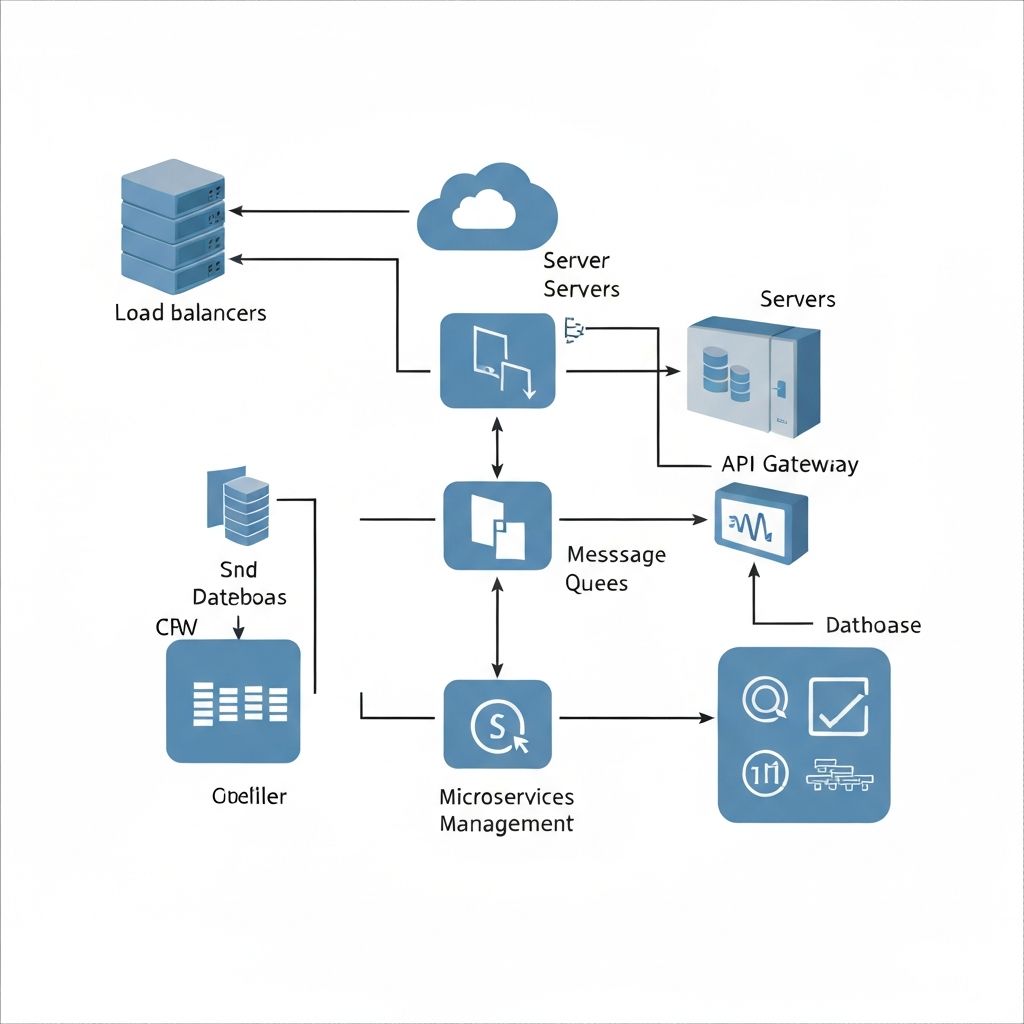
Building Scalable SaaS Applications: Architecture Best Practices
Learn the essential architectural patterns and best practices for building scalable, maintainable SaaS applications that can grow with your business.
Building Scalable SaaS Applications: Architecture Best Practices
Building a Software as a Service (SaaS) application that can scale from hundreds to millions of users requires careful architectural planning from day one. The decisions you make early in development will determine whether your application can handle growth gracefully or will require expensive rewrites down the road.
Understanding SaaS Architecture Fundamentals
Multi-Tenancy: The Foundation of SaaS
Multi-tenancy is the cornerstone of SaaS architecture, allowing a single instance of your application to serve multiple customers (tenants) while keeping their data isolated and secure.
Three Main Approaches:
1. **Single Database, Shared Schema**: All tenants share the same database and tables, with tenant identification through a tenant ID column
2. **Single Database, Separate Schemas**: Each tenant has their own schema within a shared database
3. **Separate Databases**: Each tenant has their own dedicated database
Choosing the Right Multi-Tenancy Model
The choice depends on several factors:
Core Architectural Patterns
1. Microservices Architecture
Breaking your SaaS application into microservices offers several advantages:
2. Event-Driven Architecture
Implement event-driven patterns to:
3. CQRS (Command Query Responsibility Segregation)
Separate read and write operations to:
Database Design for Scale
Horizontal vs. Vertical Scaling
Vertical Scaling (Scale Up)
Horizontal Scaling (Scale Out)
Database Sharding Strategies
When your data outgrows a single database:
1. **Tenant-based sharding**: Distribute tenants across multiple databases
2. **Feature-based sharding**: Separate different features into different databases
3. **Geographic sharding**: Distribute data based on user location
Caching Strategies
Implement multiple layers of caching:
Security Architecture
Identity and Access Management (IAM)
Implement robust IAM with:
Data Protection
Ensure data security through:
Performance Optimization
API Design Best Practices
Monitoring and Observability
Implement comprehensive monitoring:
Deployment and DevOps
Containerization and Orchestration
Use containers for:
Infrastructure as Code (IaC)
Manage infrastructure through code:
Cost Optimization Strategies
Resource Management
Multi-Cloud Strategy
Consider multi-cloud approaches for:
Common Pitfalls to Avoid
1. **Premature optimization**: Don't over-engineer for scale you don't have yet
2. **Ignoring data consistency**: Plan for eventual consistency in distributed systems
3. **Neglecting monitoring**: Implement observability from day one
4. **Tight coupling**: Keep services loosely coupled for better maintainability
5. **Security as an afterthought**: Build security into your architecture from the start
Conclusion
Building scalable SaaS applications requires careful consideration of architecture patterns, technology choices, and operational practices. Start with a solid foundation, plan for growth, and continuously monitor and optimize your system as it scales.
Remember that scalability is not just about handling more users—it's about maintaining performance, reliability, and cost-effectiveness as your business grows. The architectural decisions you make today will determine your application's ability to scale tomorrow.
Success in SaaS development comes from balancing current needs with future requirements, always keeping the end user experience at the center of your architectural decisions.
Michael Chen
Senior Software Architect
Michael Chen is a Senior Software Architect at GoForSys with over 12 years of experience designing and building large-scale distributed systems. He specializes in cloud-native architectures and has helped numerous startups and enterprises scale their applications.
Join the Discussion
Share your thoughts and engage with other readers about this article.
Never Miss an Update
Subscribe to our newsletter and get the latest tech insights delivered to your inbox.